
We should work in unison to boost growth: FM

The Budget decides to take the lead in revving up infrastructure.

The US president tweeted on Friday that Mulvaney "has done an outstanding job" in his administration and would take over from John Kelly in the new year.
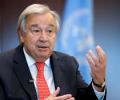
United Nations Secretary-General Antonio Guterres said on Monday that he has been in 'very close contact' with India and other countries on mediation efforts towards bringing an end to the war in Ukraine.

GST will yield 'better value for money' for car buyers, increasing automobile industry demand, says Sandip Neogi.

'We are looking at the Budget with the hope that it will address all issues even at the cost of exceeding the fiscal deficit target.'

The Narendra Modi government's alacrity in promoting ease of tax administration, a critical component in the ease of doing business index, has set in motion several incremental policy and administrative reforms, says Mukesh Butani.
.jpg)
Declining prices of food items like vegetables pulled down retail inflation to 5.59 per cent in July, bringing it back within the RBI's comfort zone after two months, official data showed on Thursday. The retail inflation based on the Consumer Price Index (CPI) had remained above 6 per cent during May and June. The government has mandated the RBI to maintain retail inflation at 4 per cent, with a margin of 2 per cent on either side. The CPI based inflation stood at 6.26 per cent in June 2021 and 6.73 per cent in July 2020.

NSO Group, an Israeli surveillance software company, has been under increasing attack following allegations that its Pegasus phone spyware was used for surveillance on journalists, activists and political leaders in several countries including India. NSO has denied any wrongdoing.

Senior bureaucrats say the government has planned a 'feel-good' Budget after the 'pain' of demonetisation.

It plans to use it as collateral, along with forex reserves, to print currency.
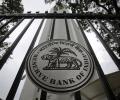
The non-food component in the price basket will continue to keep inflation at a high level and result in a "long pause" in interest rates, a foreign bank said on Wednesday. The central bank is likely to pare the pandemic-driven emergency response as well, the report by Singaporean lender DBS said. It can be noted that the high inflation driven by the food prices has forced the RBI to go for a status quo in rates for the three consecutive reviews of the bi-monthly policy meetings, even as growth continues to be in the negative territory.
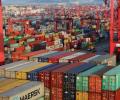
Imports during October also rose by 17.62 per cent to $44.11 billion, leading to widening of trade deficit to $17.13 billion.
The Business Confidence Index (BCI) prepared by the Delhi-based think tank NCAER declined by 27.5 per cent in the first quarter of the current financial year over the previous quarter mainly on account of the second wave of the COVID-19 pandemic. The BCI on a quarter-on-quarter basis decreased by 35.3 per cent for the services sector, 32.9 per cent for the consumer durables sector, 32.3 per cent for the capital goods sector, 17 per cent for the intermediate goods sector and 14.3 per cent for the consumer non-durables sector, NCAER said in a release.

There are two ways: Deliver a rapidly growing economic pie or reform GST and close corporate tax loopholes, suggests T N Ninan.
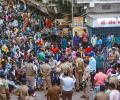
'We may have moved back three decades on the fiscal situation,' notes T N Ninan.

The Centre's push to sell Air India on priority has led to delays in other strategic divestment proposals, such as privatising United India Insurance, as well as ongoing transactions, such as Shipping Corporation of India (SCI) and Bharat Petroleum Corporation (BPCL), revealed multiple officials involved in the process. The Department of Investment and Public Asset Management (DIPAM) is yet to take new privatisation recommendations of the NITI Aayog to the core group of secretaries on disinvestment (CGD) headed by the Cabinet secretary, said one of the officials. The priority now is to ensure all approvals for Air India are in place since the government intends to hand over the national carrier as early as this month.
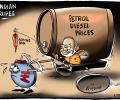
Oil sank to the lowest level in a month after shedding all of its gains from the US-Iran clash as traders waited to see whether any further hostilities will disrupt exports from the East Asia.

'When bankers are hounded by investigative agencies for credit decisions going wrong and defaulters are treated like outcasts, who will borrow money and who will lend?' asks Tamal Bandyopadhyay.

No longer Bengal's finance minister, Amit Mitra, Mamata's principal chief advisor, will still advise and aid the 'chief minister and finance department on all matters relating to management of state finance', represent the 'state government in national and international events/meetings/committees' and examine 'important proposals/files and policy issues relating to financial matters referred to him for advice/views'.

UBS, Credit Suisse see emerging markets doing well next year, but expect India to underperform, given its rich valuations.

Bankers said as part of its debt reduction plan, Canada's Brookfield-sponsored India Infrastructure Trust acquired a pipeline for Rs 13,000 crore from East West Pipeline Ltd, an arm of Reliance Industries Holding Private Ltd, and all the liabilities are now off the subsidiary's books.

In fact, no other recent Union Budget has held so much significance for the Indian economy as the one to be presented in about six weeks from now, notes A K Bhattacharya.
The budget-making exercise offers golden opportunities despite challenges, observes Shankar Acharya, former chief economic adviser to the Government of India.

How do we get back to higher trend growth? The heart of the problem lies in private corporate investment, recommends Ajay Shah.

The impact of Shinzo Abe's towering personality is such that even in death, Abe remains a polarising figure, asserts Dr Rajaram Panda.

Many banks' profits will take a hit and a few of them could even end up being in the red because of treasury losses, triggered by a sudden spike in government bond yields in the rising interest rate cycle, notes Tamal Bandyopadhyay.
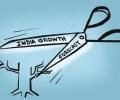
India's projected economic growth for 2022 has been downgraded by over two per cent to 4.6% by the United Nations, a decrease attributed to the ongoing war in Ukraine, with New Delhi expected to face restraints on energy access and prices, reflexes from trade sanctions, food inflation, tightening policies and financial instability, according to a UN report released on Thursday. The UN Conference on Trade and Development (UNCTAD) report downgraded its global economic growth projection for 2022 to 2.6 per cent from 3.6 per cent due to shocks from the Ukraine war and changes in macroeconomic policies that put developing countries particularly at risk. The report said while Russia will experience a deep recession this year, significant slowdowns in growth are expected in parts of Western Europe and Central, South and South-East Asia.

Spiralling prices pinched the pocket of consumer as edible oil, fuel and many other commodities turned dearer this year amid pandemic-induced disruptions but the inflationary pressure is anticipated to ease, though marginally, in the coming months. As consumers, at retail as well as wholesale levels, are willy-nilly learning to live with the new normal of curbs to contain the spread of coronavirus infections, experts are of the view that elevated inflation is likely to stay longer. After dealing with the devastating blows from the second COVID wave, especially during the April-June period, the economy is well on the revival path but the emergence of Omicron might unsettle the recovery trajectory in the short term.

April policy could be all about RBI communication.

As FY20 Budget fiscal measures need to be better understood, a reversal of the stance back to neutral will allow MPC flexibility to respond to incoming data.

Maruti Suzuki India (MSI) will keep consolidating its existing product line-up, including hatchbacks, while bolstering presence in the fast growing SUV segment to power its way back to 50 per cent market share in the domestic passenger vehicle market, as per a senior company official. The country's largest carmaker, which has seen its market share drop to 43.38 per cent in FY22 from 47.7 per cent in FY21, aims to bring in multiple SUV products with focus on new technologies like hybrid powertrains in order to enhance fuel efficiency, making them comparable or better than diesel-powered models that are currently being sold in the market, especially by its Korean rivals. With no intention of making a comeback in the diesel segment, MSI is also focusing on increasing its play in the CNG segment to bring in additional volumes.

After extricating five bodies from an abandoned coal mine in Jharkhand's Dhanbad district, government authorities and the Eastern Coalfields limited Wednesday called off the rescue operation, while locals and leaders of political parties claimed more people were still trapped under the debris.

The pandemic has led to the International Finance Corporation massively ramping up its impact investment in the country - its largest client nation globally - at $1.7 billion as of June, a 51 per cent rise over the past 12 months, the largest developmental lender into third world private sector said on Tuesday. This is nearly half of its investment in the whole of South Asia since the pandemic, which touched $3.8 billion as of June 2021, it said. "Our total commitment to India, which is our largest client country globally, at the end of June stood at $1.7 billion representing an increase of over 51 per cent from last year," IFC vice-president for Asia and the Pacific region Alfonso Garcia Mora said in a statement.

Finance minister tries to put house in order before reforms are unveiled in February.
FY22 will be the year to rebuild with the IMF projecting output growth at 11.5 per cent, economic survey at 11.0 per cent and the RBI's Monetary Policy Committee at 10.5 per cent.
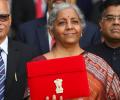
Had Finance Minister Sitharaman thought a little more about the middle class, disadvantaged sections, and the poor who are struggling, it would have been an inclusive Budget that would have made history, notes Ramesh Menon.

'Good investment opportunities should not be missed.'

'A lot of first-time users who have entered the markets after Covid are increasingly investing in mutual funds, exchange-traded funds, and stocks for their long-term goals.'
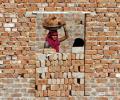
With funds more readily available, Fitch expects a portion of stalled housing projects to resume construction, and this will feed into its forecasts for India's buildings sector growth in the short term.
